AP Physics 1 is a foundational physics course designed for high school students who are ready to tackle college-level science. Offered by the College Board, this course focuses on algebra-based physics and provides students with a solid understanding of mechanics, energy, waves, and basic electric circuits.
AP Physics 1 is ideal for students interested in science, engineering, or any STEM-related field. The course develops scientific reasoning, critical thinking, and problem-solving skills, preparing learners for further studies in physics and beyond.
What Is AP Physics 1?
AP Physics 1: Algebra-Based is an introductory physics course equivalent to a first-semester college-level class. It emphasizes understanding physical principles through conceptual reasoning, mathematical analysis, and hands-on laboratory experience.
Unlike AP Physics C, which requires calculus, AP Physics 1 uses algebra and trigonometry, making it accessible to a broader range of students.
Topics Covered in AP Physics 1
AP Physics 1 covers several core concepts in classical physics. These include:
⚙️ Kinematics
- Motion in one and two dimensions
- Velocity, acceleration, displacement
- Graphical analysis of motion
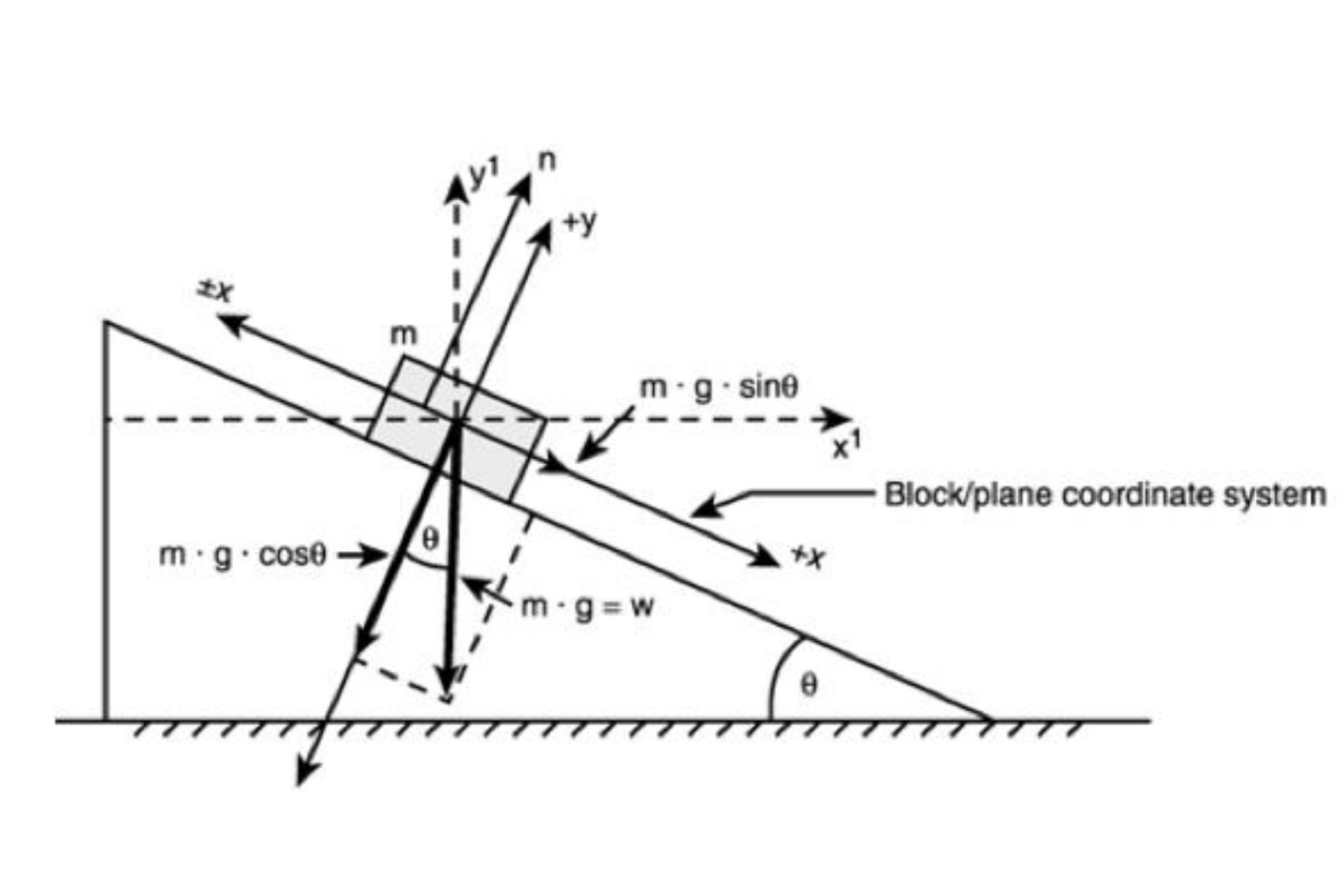
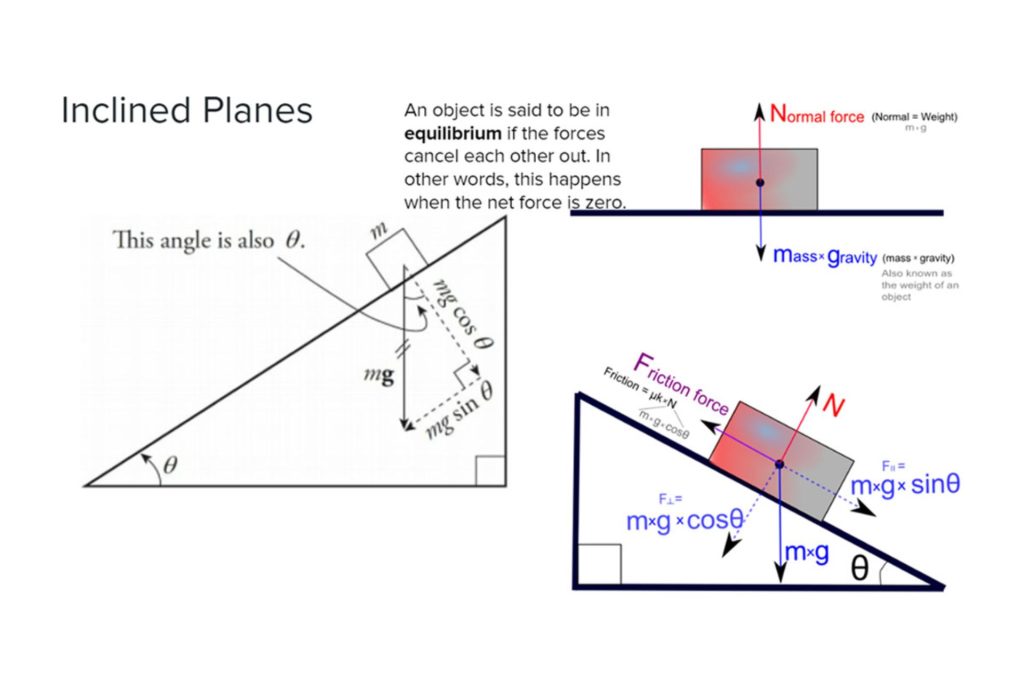
🧲 Newton’s Laws
- Force, mass, and acceleration
- Free-body diagrams
- Friction, tension, and normal forces
🔁 Circular Motion and Gravitation
- Centripetal force and acceleration
- Newton’s Law of Universal Gravitation
💥 Work, Energy, and Power
- Work-energy theorem
- Kinetic and potential energy
- Conservation of energy
- Power calculations
🎯 Linear Momentum
- Impulse-momentum theorem
- Conservation of momentum
- Elastic and inelastic collisions
🌀 Rotational Motion
- Torque, angular velocity, and acceleration
- Moment of inertia
- Rotational kinematics and dynamics
🔧 Simple Harmonic Motion
- Pendulums and springs
- Period, frequency, and energy in oscillations
🌊 Mechanical Waves and Sound
- Wave properties
- Superposition and interference
- Sound waves
🔌 Basic Electrical Circuits
- Ohm’s Law
- Series and parallel circuits
- Energy and power in circuits
This broad coverage gives students a comprehensive introduction to physics and builds a foundation for more advanced courses.
AP Physics 1 Exam Structure
The AP Physics 1 exam is divided into two main sections and lasts 3 hours:
📘 Section I: Multiple Choice (50%)
- 50 questions
- Includes standalone and passage-based items
- Tests conceptual understanding and problem-solving skills
✍️ Section II: Free Response (50%)
- 5 questions:
- Experimental Design
- Quantitative/Qualitative Translation
- Paragraph Argument (Short Answer)
- Short Answer (2 questions)
These questions require students to analyze experimental data, justify reasoning, apply mathematical relationships, and explain concepts in writing.
Skills You Will Develop in AP Physics 1
AP Physics 1 goes beyond memorization. It equips students with:
- Scientific reasoning: Apply logic to explain physical phenomena.
- Quantitative analysis: Use formulas, graphs, and units correctly.
- Data interpretation: Read, construct, and analyze tables, charts, and graphs.
- Experimental design: Understand how to set up, conduct, and evaluate experiments.
- Communication skills: Explain answers clearly and justify reasoning in writing.
These skills are crucial for success in college science and engineering programs.
Benefits of Taking AP Physics 1
Taking AP Physics 1 offers several academic and personal advantages:
- College Credit: A score of 3 or higher may earn credit at many universities.
- Strengthened College Application: Shows readiness for rigorous STEM programs.
- Foundation for Advanced Courses: Prepares students for AP Physics 2, AP Physics C, and university-level physics.
- Improved Problem-Solving: Enhances logical thinking useful across subjects.
- Hands-on Experience: Lab activities develop real-world science skills.
Whether you’re pursuing physics or just want to challenge yourself academically, AP Physics 1 is a powerful step forward.
Tips to Succeed in AP Physics 1
To perform well in AP Physics 1, students should adopt the following strategies:
📚 Build Strong Algebra Skills
Physics problems often require rearranging equations and interpreting graphs. Comfort with algebra is essential.
🔍 Understand, Don’t Memorize
Focus on grasping the why behind each concept. Try to explain phenomena in your own words.
✏️ Practice Free-Response Questions
These questions test deeper thinking and reasoning. Write out explanations and check official rubrics.
🧪 Engage in Lab Work
Participate actively in lab activities. Many exam questions are based on experimental design and data analysis.
🔄 Review Frequently
Don’t wait until the last minute. Space out your studying and review each topic multiple times.
👥 Study with Others
Group discussions help uncover gaps in understanding and provide new perspectives.
AP Physics 1 vs. AP Physics 2 and AP Physics C
Students often wonder how AP Physics 1 fits into the larger AP Physics sequence. Here’s a quick comparison:
| Feature | AP Physics 1 | AP Physics 2 | AP Physics C |
| Math Level | Algebra-based | Algebra-based | Calculus-based |
| Focus | Mechanics, Waves | Fluids, Thermo, E&M, Optics | Mechanics or E&M |
| Ideal For | First-time physics | Continuation after AP1 | Engineering/Physics majors |
| Exam Format | Multiple + Free Response | Similar format | More math-intensive |
If you’re planning to pursue science or engineering in college, taking AP Physics 1 is a great first step.
Recommended Resources for AP Physics 1
Here are some top resources to help you prepare:
- Textbooks:
- College Physics by OpenStax (free)
- 5 Steps to a 5: AP Physics 1
- Barron’s AP Physics 1
- Online Platforms:
- College Board AP Classroom
- Khan Academy (AP Physics 1 section)
- Flipping Physics (YouTube)
- Bozeman Science (conceptual videos)
- Practice Materials:
- Official College Board released exams
- Albert.io AP Physics 1 practice
- UWorld Physics question bank
Using a mix of video lessons, textbooks, and practice tests will help you understand the material from all angles.
Who Should Take AP Physics 1?
You should consider taking AP Physics 1 if:
- You’re interested in science, engineering, or medicine.
- You enjoy solving real-world problems using logic and math.
- You plan to take more advanced physics or STEM courses later.
- You want to demonstrate academic rigor on college applications.
This course is commonly taken by 10th or 11th graders who have completed algebra and basic trigonometry.
Conclusion: Why AP Physics 1 Is Worth It
AP Physics 1 is a challenging but rewarding course that lays the foundation for future studies in science and engineering. It teaches critical thinking, problem-solving, and the scientific method—skills that are essential not only in academics but in real life.
With the right preparation and mindset, AP Physics 1 can be your launchpad into the world of STEM. Embrace the concepts, stay consistent in your practice, and take advantage of the many resources available to master AP Physics 1.